
6/4/2026
In the early 1990s, Gucci was on the brink of collapsing. Disastrous family feuds, financial mismanagement, counterfeits, licensing deals gone wrong, and the unfortunate leadership of Maurizio Gucci had pushed the house to the brink.
If you're not familiar with the rise and fall of Gucci in the mid 1980s, House of Gucci offers a suitably dramatic introduction.
More than $360 million in debt, Gucci was in dire need of resuscitation. It needed to be completely and utterly transformed if it wanted to survive. And there was only one man to do it.
After rapidly climbing the Gucci ranks, 33-year-old Tom Ford from Austin, Texas, became Creative Director in 1994.
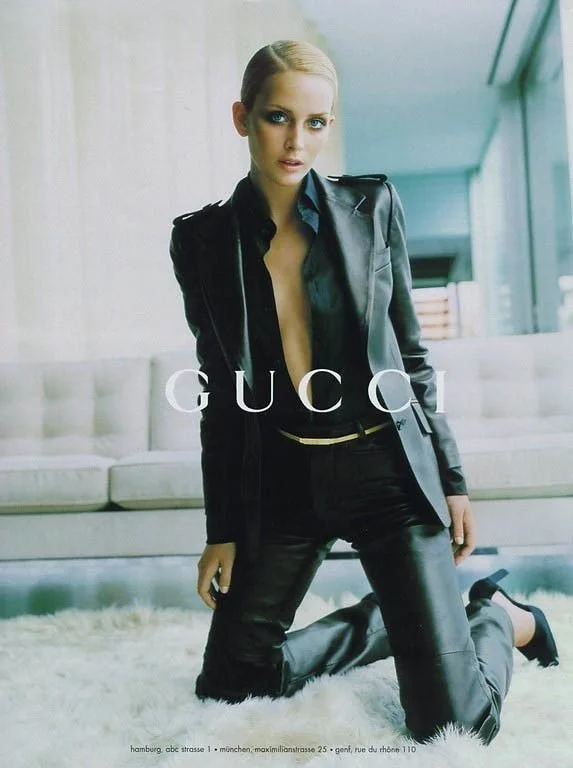
While much of the decade embraced minimalism and restraint, Ford rose to power with something different. Glamour that commanded attention rather than asking for it.
Ford made his mark at Gucci with unbuttoned silk shirts, deep necklines, shine, G-strings, and advertising campaigns that were impossible to ignore. He understood that luxury had become polite. And polite rarely changes culture.
There was no line Ford wasn’t willing to cross, and people fell in love with it. It was scandalous, sexy, and radically different from the minimalist mood that had defined much of the decade.
The blue silk satin button-down, famously worn by Kate Moss on the runway Fall/Winter 1995–96, went on to be one of the most recognizable from Tom Ford’s time at Gucci. Madonna followed shortly after, wearing the shirt to the 1995 MTV VMAs and helping cement its place in fashion history.
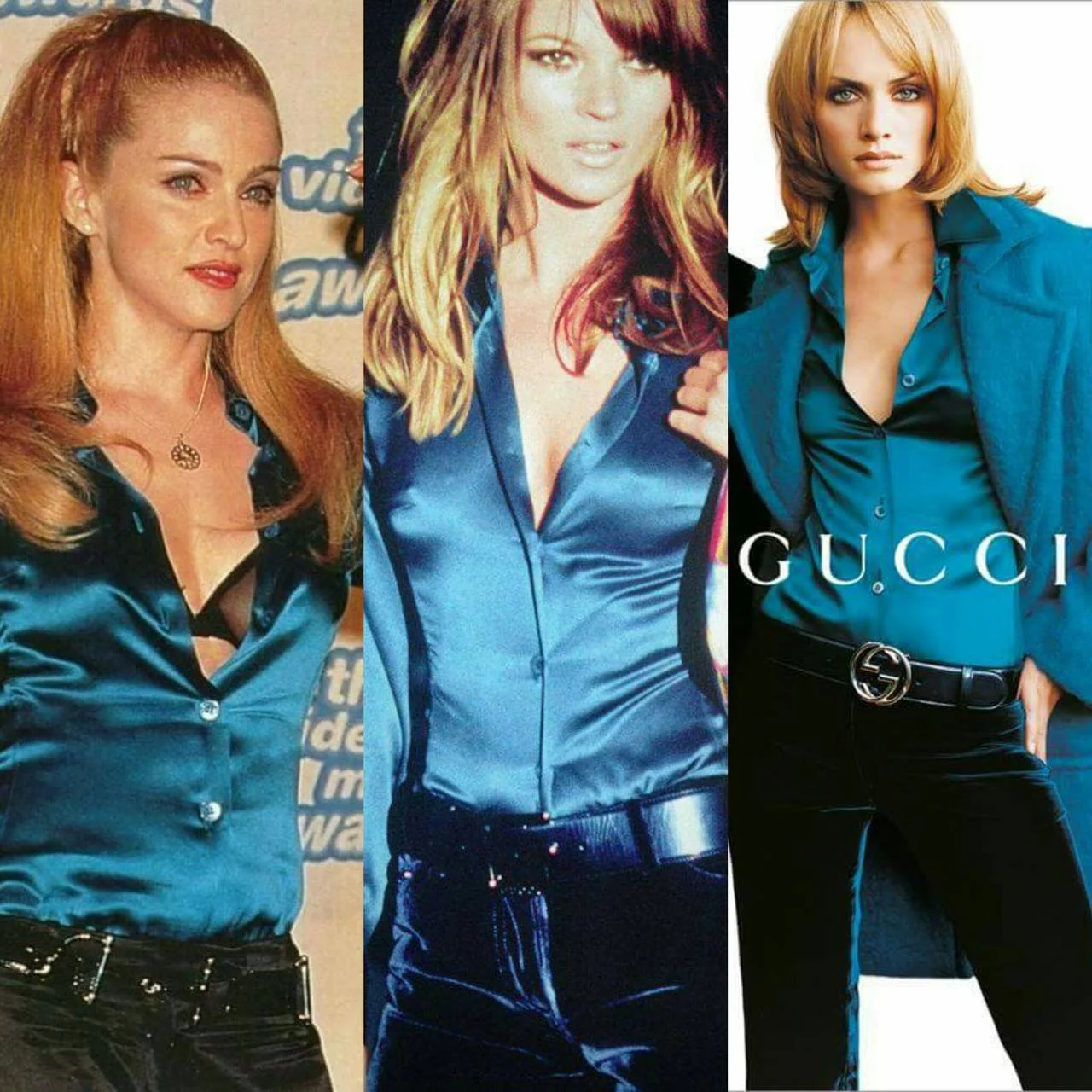
Photo Curtesy of 1stDibs
We also can’t talk about Ford without mentioning his velvet hipster trousers, which paired perfectly with the blue button-down. Pieces like these transformed Gucci's image from struggling to decadent, provocative, and glamorous.
Ford used sex as a business strategy. The genius of Tom Ford wasn't that he made fashion sexy. Fashion had always been sexy. The genius was understanding that desire itself could be a luxury product.
He wasn't selling trousers. He was selling confidence. He wasn't selling a silk shirt. He was selling the fantasy of becoming the kind of person who could wear one.
His work was not just about making women attractive to men or vice versa. The sexiness of his collections came from control rather than vulnerability.
Models during the Ford era appeared as dangerous and confident, and his advertising made sure the fashion audience knew it. Gucci campaigns were extremely suggestive, models always posed provocatively. Sparking controversy became the new norm for Ford.
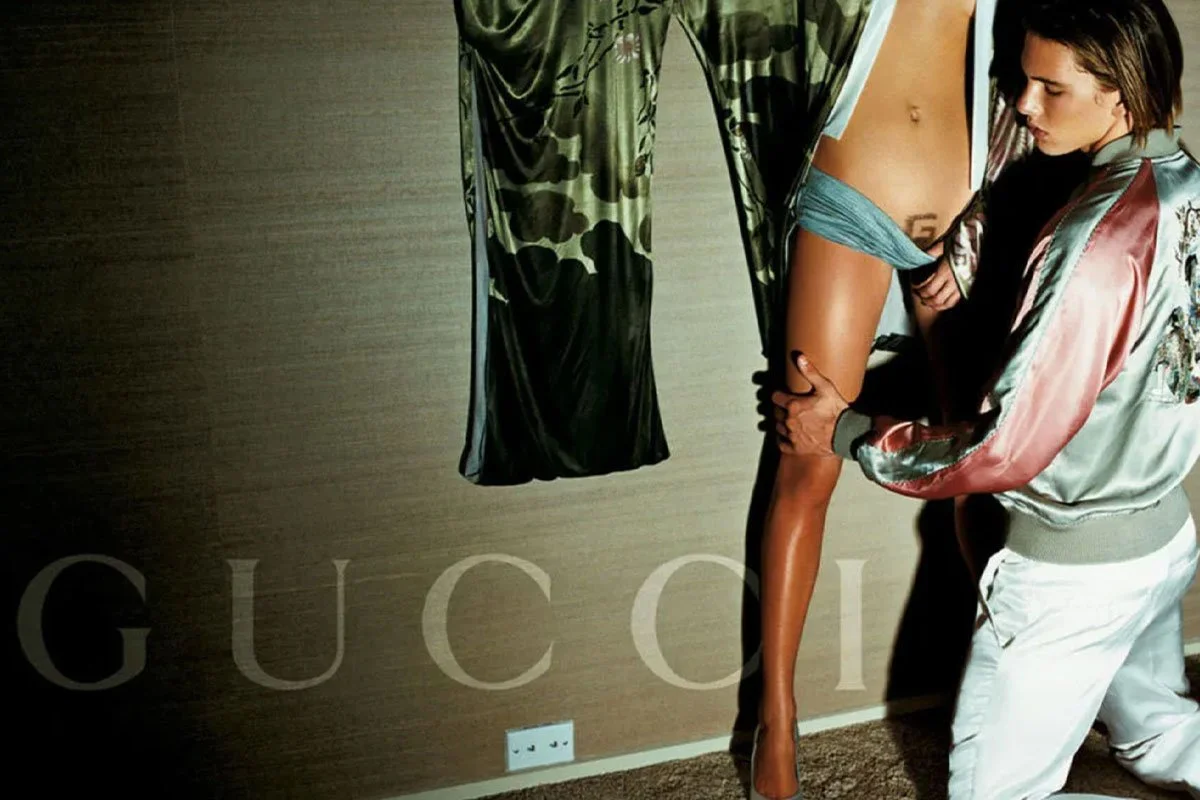
Photo Curtesy of The Last Fashion Bible
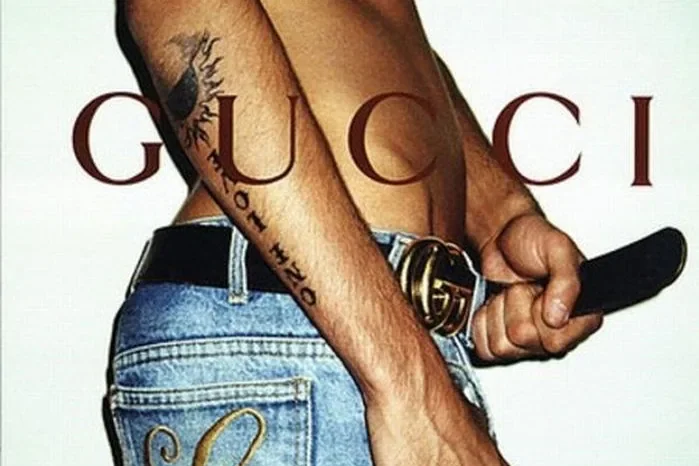
Photo Curtesy of Dazed
The fashion world reveled in Ford's creations from the mid-1990s until his departure from Gucci in April 2004.
When Ford left, Gucci Group was valued at roughly $10 billion, compared to a company going under when he arrived. Many fashion historians consider it one of the most successful creative turnarounds in luxury fashion history.
The irony is that even after his Gucci departure, fashion spent the next two decades chasing the language of luxury he had already written.
In 2005, Tom Ford launched the Tom Ford brand, which centered around tailored clothes, power dressing, and mature sensuality. In 2022, Estée Lauder acquired the Tom Ford brand in a deal worth approximately $2.8 billion.
The famous Gucci years weren't about nudity or shock value. They were about creating a world people wanted to enter.
In many ways, Tom Ford's greatest legacy isn't a specific garment or campaign. It's the idea that luxury fashion should make you feel something before it convinces you to buy something.
Scroll through social media in 2026 and Ford's fingerprints are everywhere. Luxury brands continue to package desire as a lifestyle, just as Ford did three decades ago. The medium has changed, but the formula remains remarkably familiar.
Tom Ford didn't invent sex.
He reinvented how fashion sells it.