
2/12/2026
For a long time, romance felt like it existed privately. Not entirely absent, but more concealed. It lived in messages sent, then edited, in songs played alone in the car, in the quiet decision to care without announcing it aloud. But visually, romance had disappeared. Clothing stopped signaling emotional risk. It stopped revealing anything that could be interpreted as softness.
People dressed like they did not want to be read. Neutral palettes. Clean lines. Emotional restraint. The goal was to appear intact and self-contained.
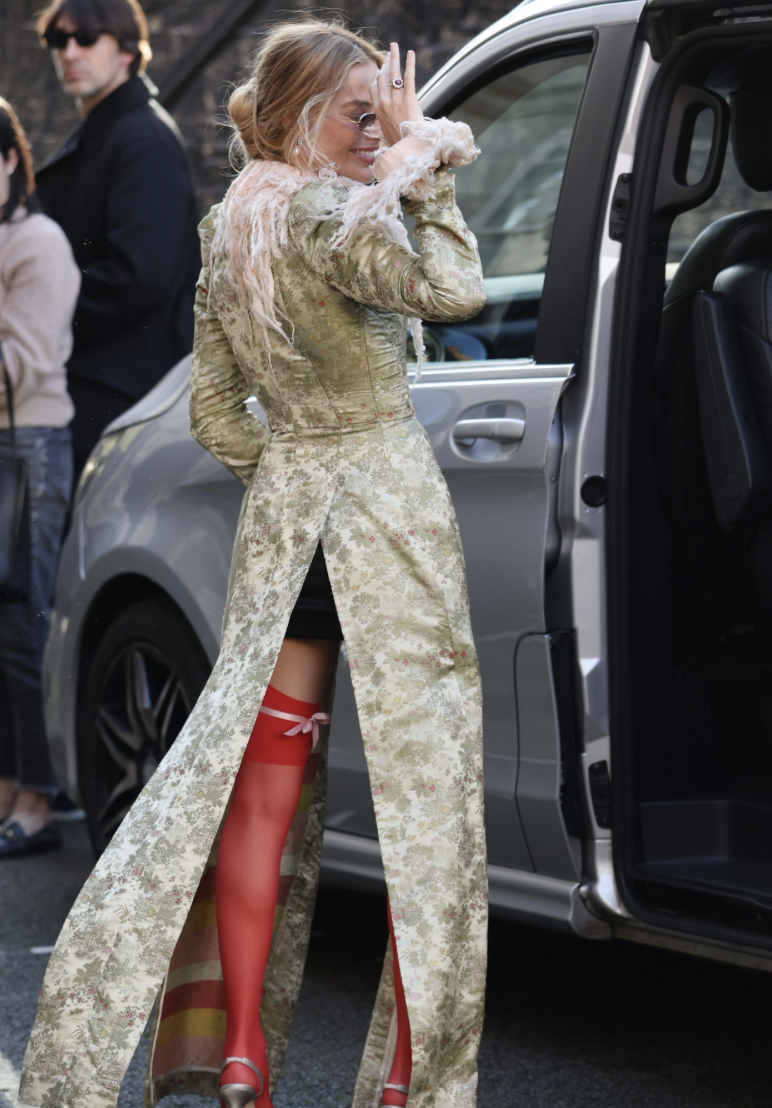
And then Margot Robbie stepped onto the Wuthering Heights press tour, and romance began to swirl. Not dramatically, but undeniably present.
She started wearing fabrics that responded to movement rather than controlling it. She wore blush rose tones that resembled the color of skin after being touched. Ivories that carried warmth. Soft creams that looked aged. And bright, stunning reds and pinks.
These are the colors of passion at its loudest and after it has settled. Passion that lives quietly beneath the surface, ruminating instead of erupting.
Much of this can be traced to her stylist, Andrew Mukamal, who has approached this press tour less like wardrobe selection and more like emotional authorship. Mukamal dresses Robbie in garments that feel inherited rather than chosen. Corsetry that feels like emotional containment waiting to burst, and jewelry that resembles something passed down rather than put on.
Nothing feels purely aesthetic. Everything feels referential.
Wuthering Heights has never been a story about stable love. It is a story about love that destabilizes. Love that alters structure. Love that leaves permanent atmospheric change.
There are other examples reflective of this shift you are probably familiar with. Longing and yearning are no longer disguised, but celebrated. Conrad Fisher, from The Summer I Turned Pretty, loving with a quiet kind of devastation. Wrigley, from Tell Me Lies, carrying long-lasting infatuation. These characters do not perform detachment to protect themselves. They allow themselves to be altered in the way only love can.
For a long time, yearning was considered something to conceal. Evidence of emotional imbalance. Evidence that you had given too much away.
Now, it is becoming something else. It is showing up in fashion, cinema, and books, and reflects a cultural exhaustion with emotional self-protection.
People are no longer interested in appearing unaffected. They are interested in appearing real.
Romantic dressing is not about attracting attention. It is about refusing emotional invisibility. There is something deeply human about refusing to make yourself smaller just to remain intact.
And ultimately, romance reintroduces risk. Not the risk of rejection, but the risk of transformation.
Margot Robbie’s press tour did not invent this shift. It simply made it visible.
Romance never disappeared. We just stopped wearing it.